Dial, hands and markers
The dial is usually the first thing the eye reads, and it is often the part of a watch that changes most with age. Look at the typography of the printing, the finish of the surface, the way the markers are applied or printed, and whether the elements sit evenly. Over time dials may develop marks, shifts of tone or fine surface cracking, depending on their materials and on how the watch has been kept.
Hands and markers are small, but they carry a good deal of information. Check that the hands suit the style and proportion of the dial, that they sit cleanly without touching the dial or the crystal, and that the markers line up with the minute track. Where the dial and hands carry luminous material, notice whether the two appear to have aged in a similar way.
Luminous material can darken, discolour or lose its glow, and how it does so varies with the material used and the conditions the watch has lived in. A mismatch between hands and dial is worth a question rather than a conclusion: parts are sometimes replaced during a watch’s life, and a good seller can tell you what is known about that.
The case, crystal and caseback
A case records how a watch has been worn and cared for. Look at the sharpness of the edges, the symmetry of the lugs, and the finish where polished and brushed surfaces meet. A case that has been polished more than once can show softened edges and a thinner profile, which some collectors weigh carefully and others accept as part of a watch’s story.
Check the crystal for chips and scratches, the crown for wear, and the caseback for engraving, markings or signs of having been opened. None of these settles anything on its own, but together they build an impression of the watch’s history. It is reasonable to ask whether the dimensions and details match those described for the model.
A case records how a watch has been worn and cared for.
The movement beneath
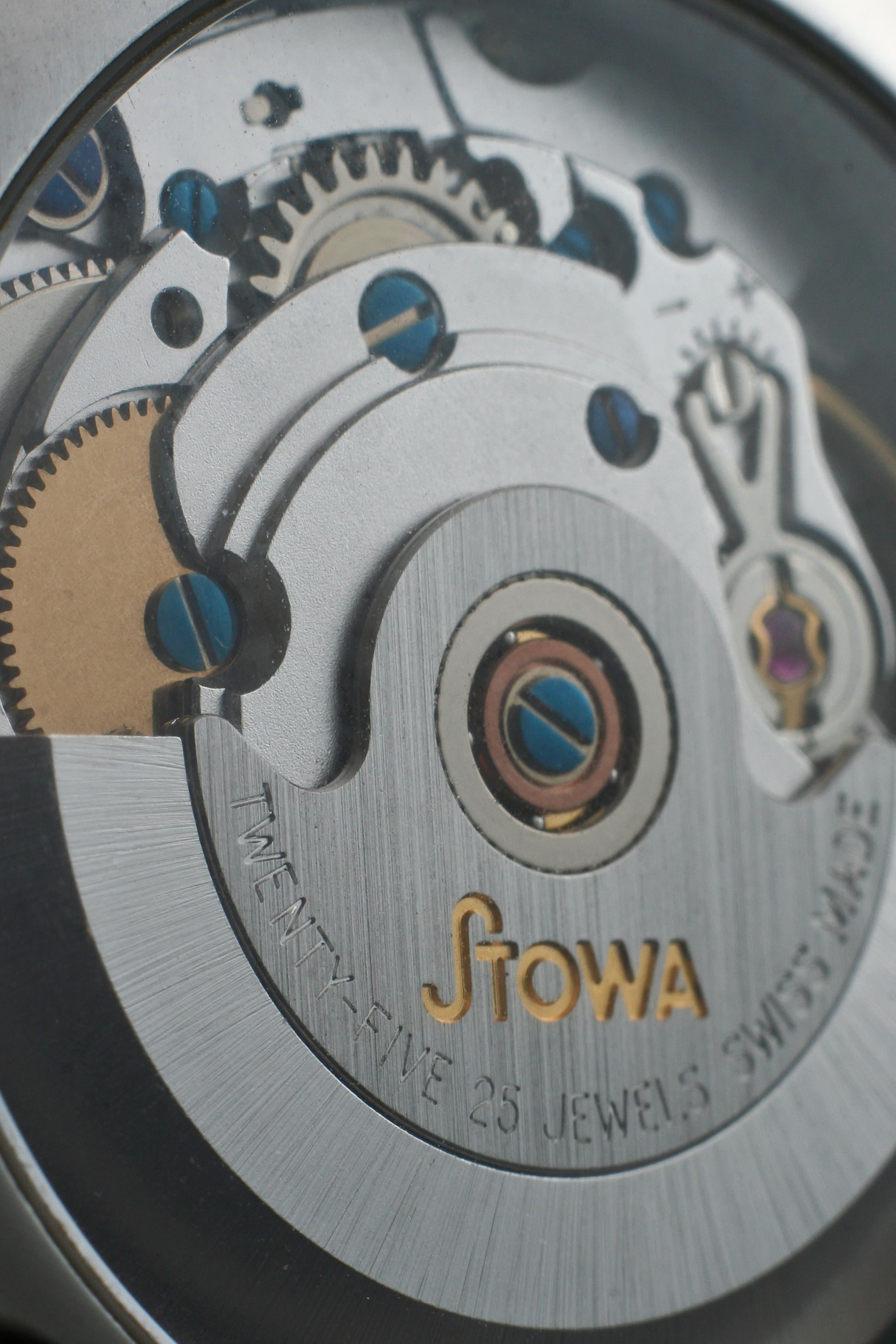
The movement is the part you usually cannot see without opening the watch. Where a caseback is solid, much of what you learn will come from how the watch behaves — whether it runs, how steadily, whether it winds and sets smoothly — and from what the seller can tell you about its servicing.
If an image of the movement is available it can help, but reading one takes experience, and a clean-looking movement is not by itself evidence of originality or of recent work. Treat a running watch as an encouraging sign, not a guarantee. Ask when it was last serviced, by whom if that is known, and whether any parts were replaced.
What a reference number can and cannot tell you
A reference number identifies a model and its general specification, and it is invaluable for research. It lets you compare a watch with published descriptions and with other examples, and it helps you ask better questions. What it cannot do is prove that a particular watch is genuine, unaltered or correctly assembled.
Numbers can be misread, misquoted, or applied to watches that have since had parts changed. Think of the reference as the beginning of an enquiry rather than the end of one. Keep apart what you have observed (the dial looks consistent), what you have been told (it was serviced) and what has been verified (a document, or an examination by a qualified watchmaker).
Questions worth asking
A short list of questions will serve you on almost any vintage watch. What is known about its history, and how is it known? Have any parts — dial, hands, crown, crystal, bracelet — been replaced? When was it last serviced? Is there documentation, and what does it actually cover? What are the known flaws?
Good answers are specific and willing to include uncertainty. ‘Not known’ is a perfectly respectable reply, while a confident answer that cannot be supported is more concerning. The aim is not to catch anyone out but to understand what you are buying.
The Journal offers general observations for collectors. It is not valuation, legal or technical advice, and it does not describe any particular watch.